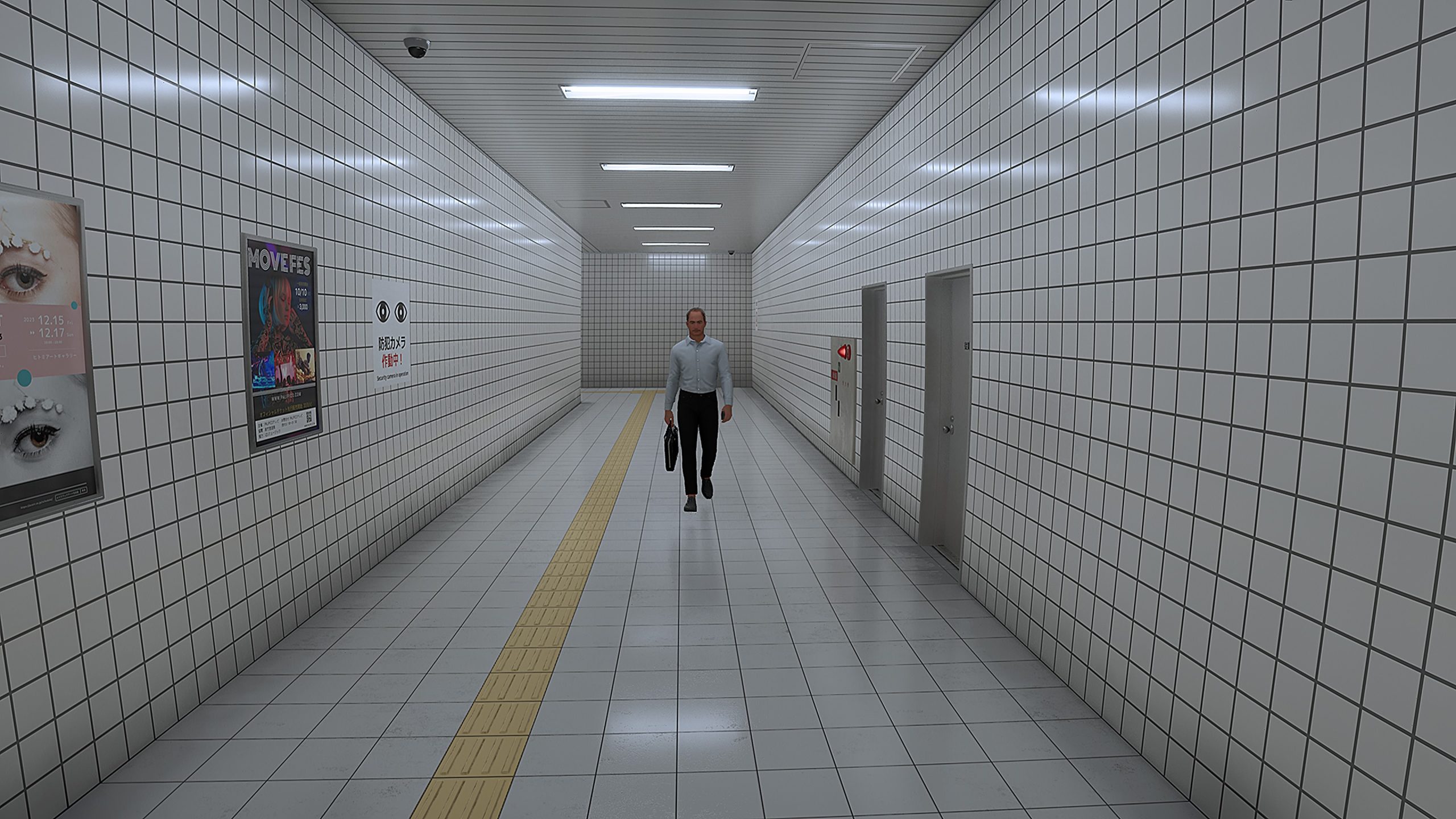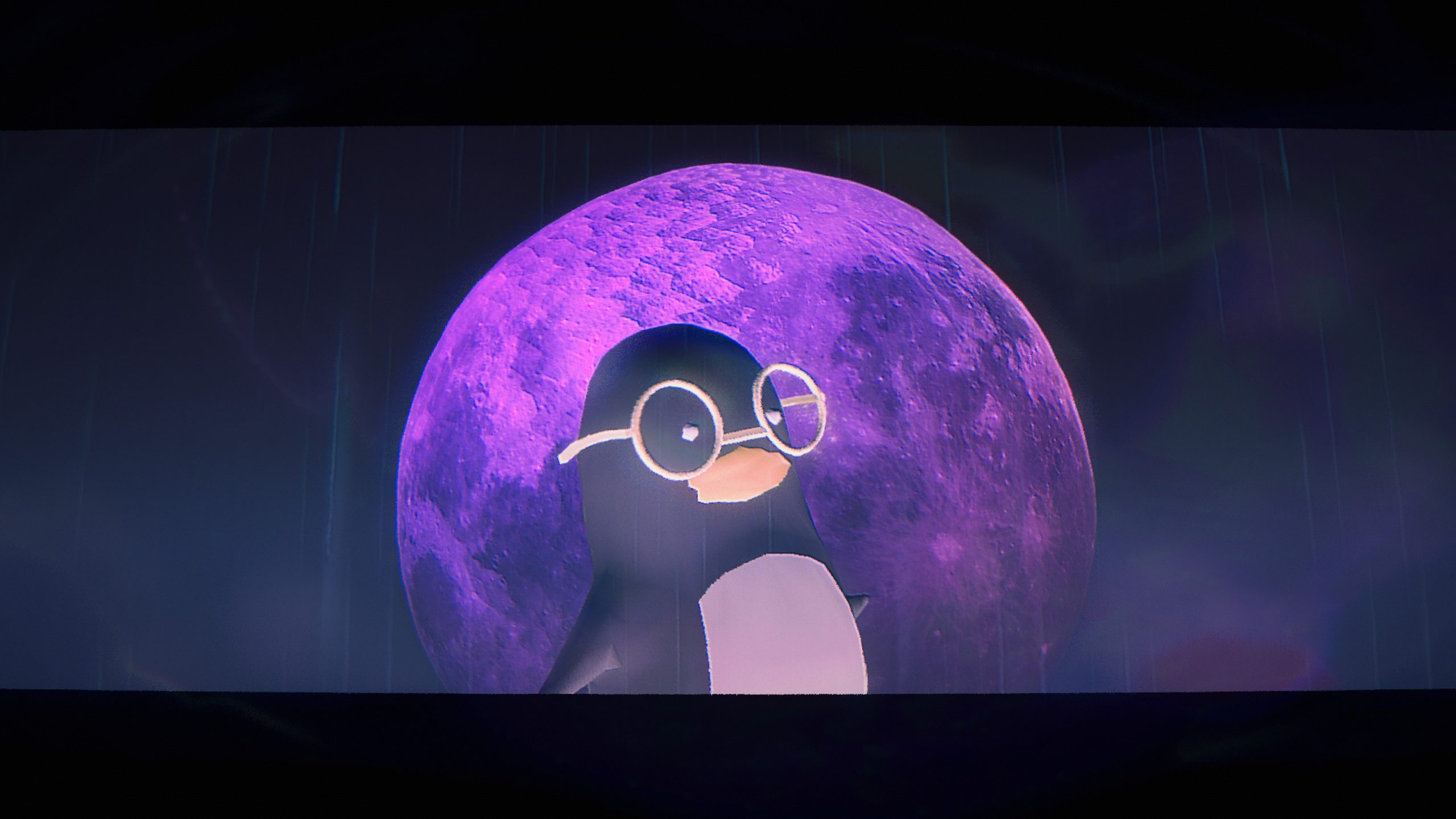
It doesn’t happen often, but occasionally, a game ticks an incredible number of my boxes, yet somehow falls flat by the time the credits roll. This was unfortunately the case with Sam Eng’s Skate Story, a hazy adventure through a stylish interpretation of Hell that I fully expected would nestle among my all-time favourites. After beating it, I’ve been trying to wrap my head around why it didn’t click with me, and I’ve finally worked it out.
Before we dig into that, though, I want to lavish all of the praise where it’s deserved since there’s plenty to love here, especially if off-kilter strangeness is your jam. It’s certainly mine. It follows a demon skater as they set off on a quest to devour the moon, partly to earn their freedom, partly because it looks so darn tasty. So, they sign a contract with the Devil, who provides them with the means to reach their desired snack: the skateboard.
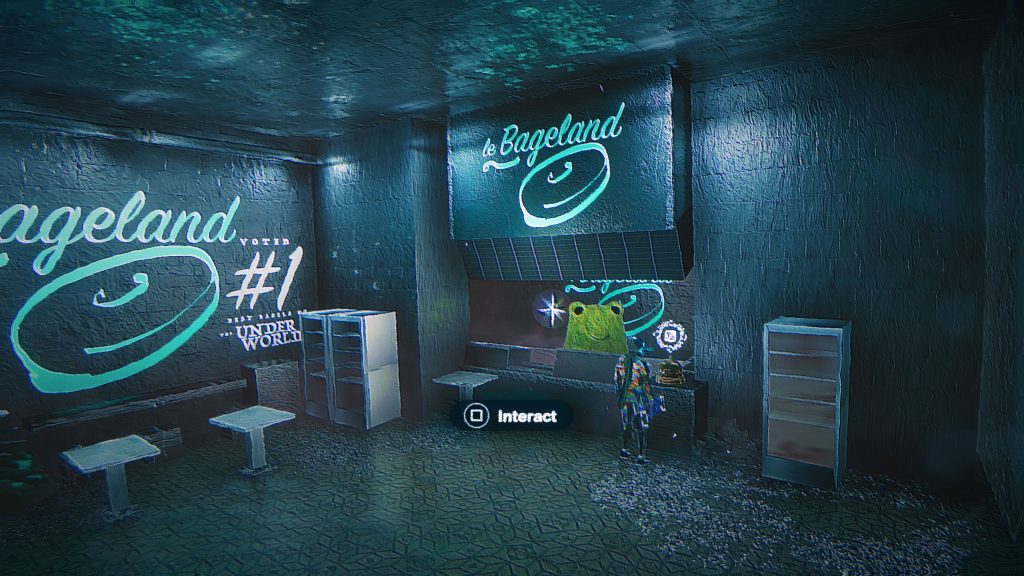
It’s a bonkers premise. One that I was immediately on board with. The delightful oddness of Skate Story is bolstered by its visual style. Our hero is made of glass, shattering in an instant whenever so much as brushing against another physical object with too much enthusiasm. And that happens a lot, given that falls from a skateboard are pretty much a prerequisite when dabbling in the hobby. Their blocky, shimmering form makes everything seem more surreal, particularly since the board itself is borderline photorealistic.
Then there are the numerous quirky NPCs you meet along the way. Whether that’s a subway train that has lots of little legs rather than wheels, a pigeon struggling to finish its manuscript or a cutesy frog who has a habit of appearing absolutely everywhere, they’re an odd bunch, but also instantly lovable. I often found myself eager to meet the next character to see what brand of strangeness they’d bring to proceedings.
Not quite style over substance
Meanwhile, the world itself flits between various locales. Sometimes it’s like crossing a Cyberpunk desert towards a portal, and others, a fragmented interpretation of a city clinging to existence through memory. That’s all backed by a sublime, mostly laid-back soundtrack from Blood Cultures that beautifully washes over you while descending each layer. It gets a little spikier later on, yet the trance-like nature remains. Check it out on Spotify if you decide against giving Skate Story a shot.
Suffice it to say, the vibes are immaculate. Even the UI and fonts hit the brief. They look like they were ripped straight from a Japanese cult hit that one friend always brings up. Still, atmosphere and delightful oddities aren’t enough to make this a strong recommendation. And you might think the mechanics are where Skate Story falls and shatters into millions of pieces of glass. But no, that’s still not the issue.
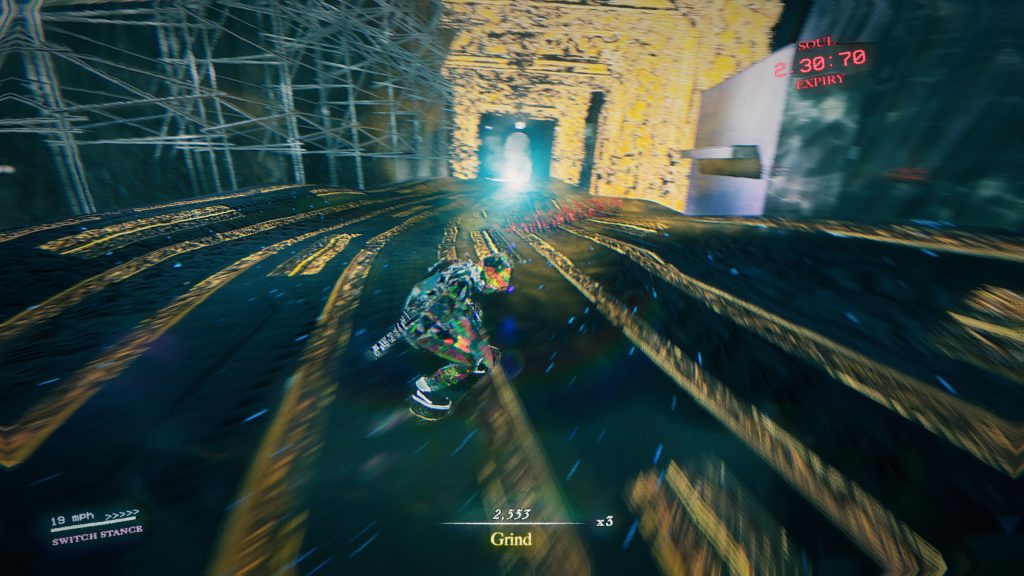
The act of skateboarding is solid. Each input is responsive, and the controls aren’t overcomplicated either. Tap the triggers for flips, double-tap Circle for spins and so on. It’s all incredibly straightforward, allowing you to chain together combos easily. Most importantly, it feels good when the board’s wheels clack against the ground after each trick.
So, what is the problem then? Well, it’s entirely the way Skate Story is structured, making it feel like it didn’t make the best use of its own mechanics. With the exception of a few minor differences, it largely switches between two level types. One focuses on skateboarding from one portal to another, the soundtrack whisking you along in a delightful, Zen-like state. The other is smaller, open-world segments. As you might have guessed from those descriptions, I massively prefer the former.
Skate Story has a few momentum issues
When it all stops, you’re dropped into the open-world portions. These are presumably intended to mirror being in a skate park, grinding along rails and pulling off tricks. However, it all feels a little stilted. Skate Story soars when you experience a sense of momentum. That feeling is promptly killed when you’re forced to slow down, arbitrarily pulling off a string of tricks to whittle down a boss’ health bar or something roughly similar. Of course, without these levels, you arguably wouldn’t meet the wonderful cast beyond cutscenes. Although I’d say that’s preferable.
It’s particularly a shame because the trick system isn’t bad. The only gripe I have mechanically is that trying to line up a grind is a little finicky. Beyond that, it’s enjoyable. Being so accessible makes nailing a 360 satisfying. It leaves me wishing the developer had found a different way to tie it all together.
With that said, it likely won’t be a dealbreaker for everyone. Skate Story has plenty to love as I’ve made clear, and I’m sure, for many, the vibes will outweigh any sluggishness the structure brings to the halfpipe. It’s worth playing either way, I just wouldn’t stake my life savings on it impressing everyone.
Score: 7/10
Time Taken: 6 hours (Far longer for the Platinum. I didn’t bother)
Played On: PS5
- For more trippy experiences, check out my Exit Eight review