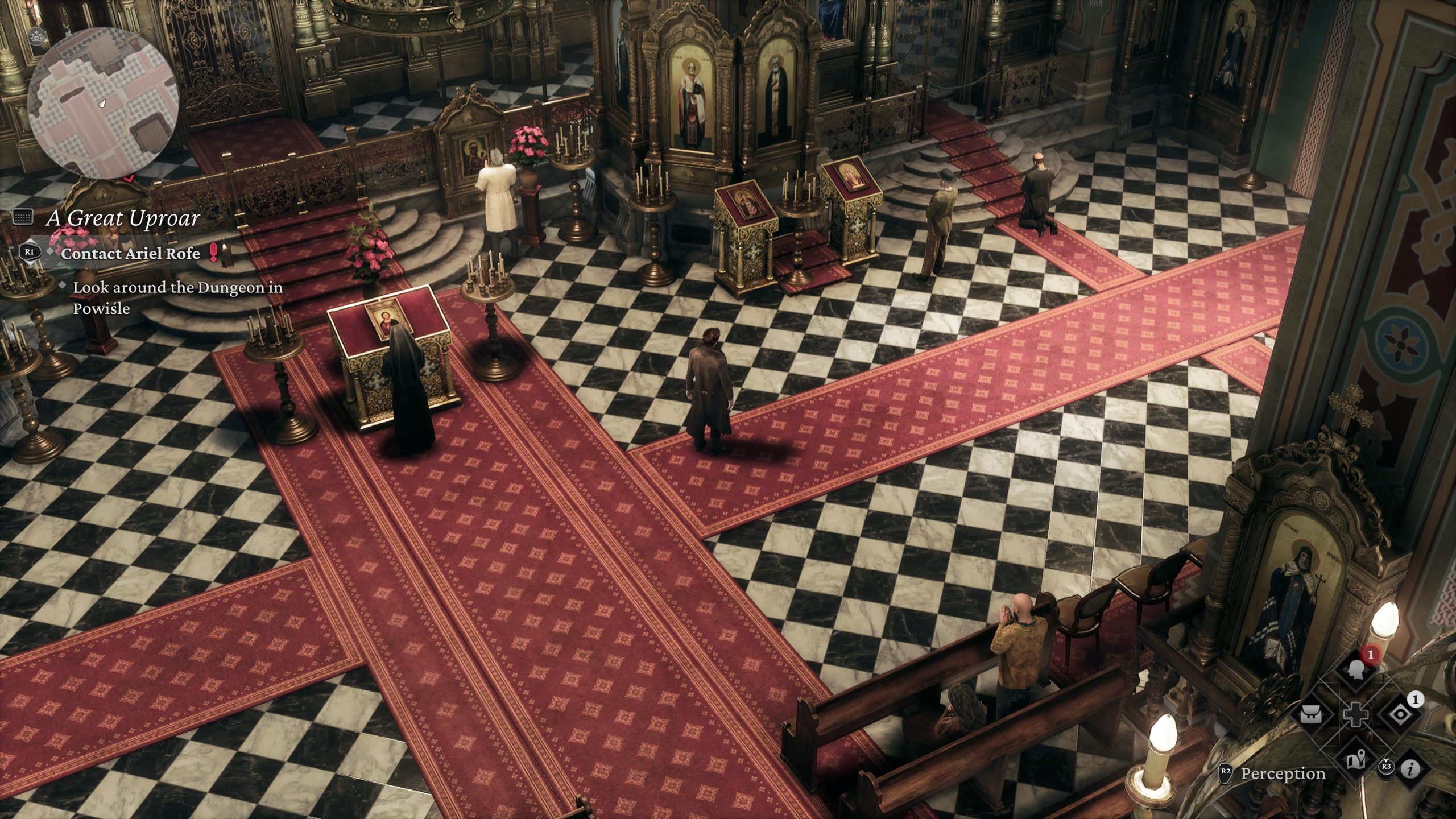
Alternate-history Poland in 1905. Warsaw is under the Russian Empire’s thumb. Slavic folklore is more real than anyone, bar the titular Thaumaturge, will admit. Fool’s Theory’s isometric RPG has a fantastic premise. It delves into parts of the world that are rarely explored in gaming, at least not with the magnifying lens promised here. And while all types of laws are broken throughout its around 20-hour story, from murder to underground fighting rings, and all manner of paranormal strangeness occurs, the biggest crime is that everything’s just a little too dull.
It gets off to a promising start. Wiktor is effectively a wannabe collector of Salutors, mysterious beings drawn to people’s Flaws. These are marks on a person’s soul that attract these otherworldly creatures. Only Thaumaturges can see them, but everyone can unknowingly feel their effects, since they amplify their charge’s emotions to manipulate them and generally cause chaos. Wiktor can take on these Flaws, taming the Salutor and using it for his own purposes. He just needs Grigory Rasputin’s help first. He’s like the Ash Ketchum of 1900s Poland, I guess. Which means Rasputin is Brock, right?
However, unlike Mr Ketchum, he has to do more than simply battling his desired creature. In fact, that only happens a grand total of seven times, some of which are completely optional. No, despite his desire to snag all the Salutors, Wiktor mostly spends his time cutting around Warsaw as a detective, using his ability to interpret emotions attached to items to track down culprits. Now, while that sounds awesome, all you truly do is rush around apartments and streets, clicking your fingers and following red particles. Then you just interact with the item, and Wiktor makes a deduction when you’ve found enough evidence.
While the writing on these various objects is interesting, I never truly felt involved in solving the mystery. I was merely a solo member of a West Side Story gang, running around Warsaw, snapping my fingers until I was guided to a fork or goblet with all the answers. It required no effort or thought. I just watched Wiktor do his thing. At first, it wasn’t too bad. But after a while, I realised there wasn’t much to the detective side of the equation. It even made me miss Fool’s Theory’s lovely interpretation of turn-of-the-century Warsaw as my eyes were locked on that floating blood trail, waiting for it to burst into particles around a half-eaten biscuit that revealed a guy was stealing from his boss. Or something to that effect.
Elementary, my dear Upyr
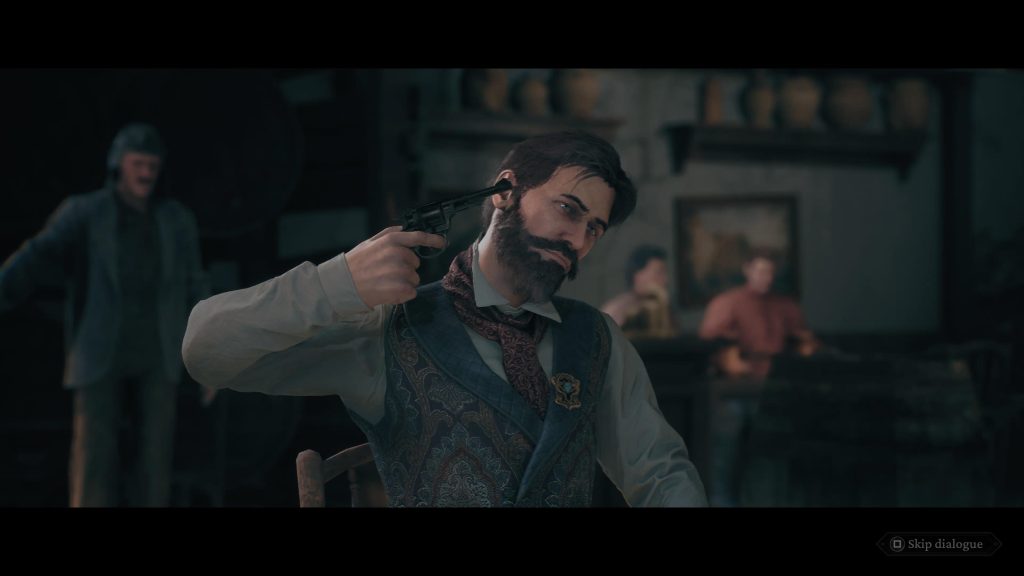
What you do with this information is a little more interesting. You see, The Thaumaturge thinks of itself as somewhere between Persona and Disco Elysium, meaning conversations and choices influence how everything plays out. Hence why there are 12 different endings. It does a good job of keeping things grey. While some RPGs might as well stick a glowing neon sign at the good and bad choices, here, anything you do is going to annoy somebody. That might be your childhood friend, your sister, or an artist who loves painting the dead. It even throws up the Life Is Strange-style ‘X will remember this’ at points.
It’s where your finger-snapping, empathy-powered kleptomania comes in handy too. Depending on the evidence, you might have additional conversation paths available. While I wouldn’t say it makes the constant wandering worthwhile, it at least helps enrich the conversation you’re currently having. Even though it’s a solid system and I like that it seems impactful, some terrible voice acting makes certain scenes really drag.
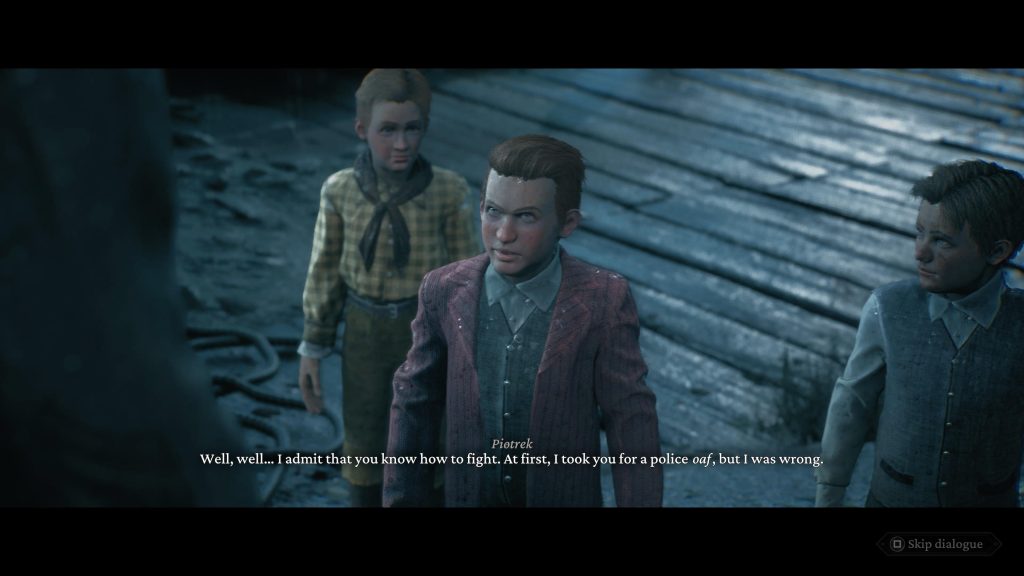
Anytime there’s a child involved, I’d recommend playing on mute. They are so unbelievably shrill and annoying that I can’t be sure whether it’s a real kid or an adult doing an awful impression. Beyond that, some of the acting is just poor. There are some fine performances too. But the wildly varied quality eats away at the overall polish the dialogue system works hard to achieve mechanically.
It’s not all following red trails and idle chit-chat, though. There is actually combat here. The Persona side of the equation, if you will. Now and then, sometimes with little provocation on Wiktor’s part, a fight will break out, throwing you into a scrap. Each turn, you and your Salutor can make a move, with the option to switch between any of your paranormal pals on the fly. I’m a big fan of turn-based combat, but this doesn’t quite hit the mark for a few reasons.
Alt-history Eastern Europe Side Story
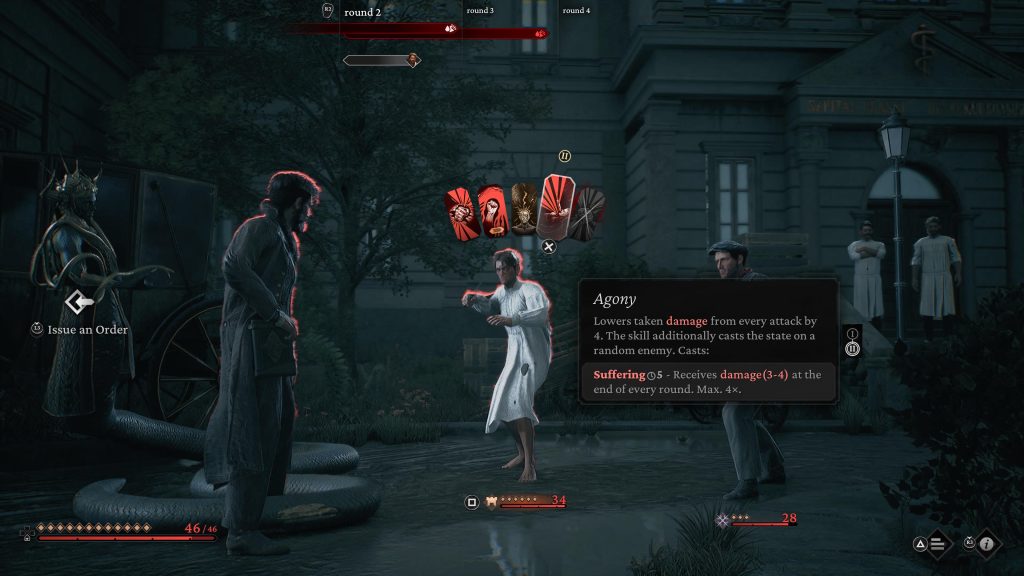
The first issue is thematic. Aside from the potentially seven times you face off against a Salutor, the enemies you face are just blokes. Even against Salutors, it’s red, shimmery versions of blokes, with your target standing in the background, all giant, occasionally waving their arms to throw some negative effects your way. That means, on the streets of Warsaw, you’re on the receiving end of punches, dagger slashes, and bullets, choreographed in a theatrical fashion that genuinely comes across like drunken boys mucking around after one too many. The finger snaps wouldn’t seem out of place.
The Salutors bring a little more entertainment to the battlefield, with Bukavac happily sinking its teeth into your foes or Morana ripping ice shards from within their bodies. That said, it lacks the flamboyance you’d like from paranormal entities strutting their stuff. I suspect the developers wanted things to be slightly grounded. With all the political machinations going on in Warsaw, gritty vibes make some sense. However, that was already lost with the drama school fisticuffs. So, why not make the mythical creatures more expressive?
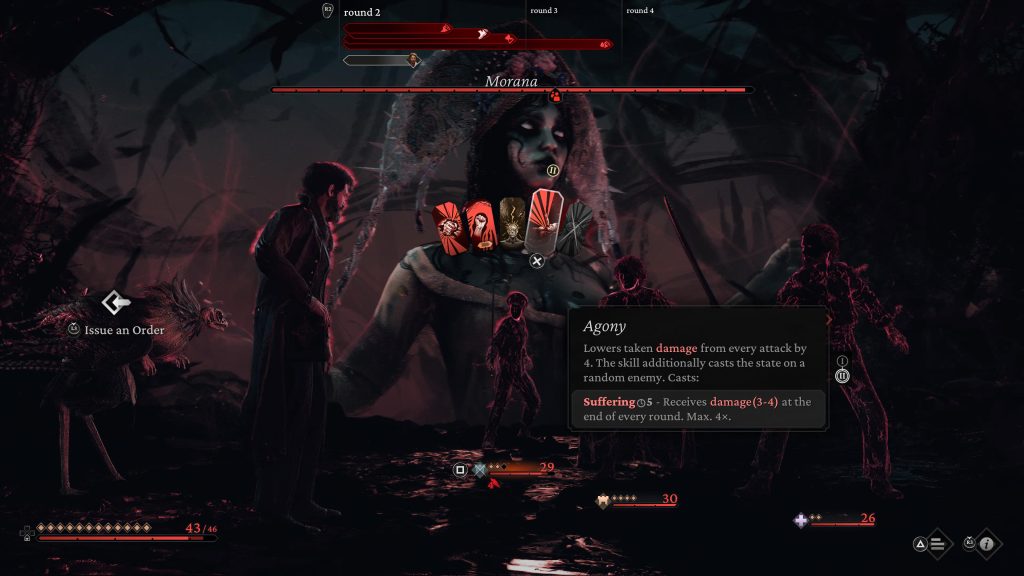
That’s not to say the combat is completely irredeemable. The tactical side offers some satisfaction, yet it’s rarely difficult. I don’t consider myself a strategic savant, but I died once during my entire playthrough, and that was because I failed to notice I stood to die if I didn’t plan my turn better. Other than that, my approach was undefeated.
The Thaumaturge is all about speed, despite being turn-based. Your own attacks and your Salutor’s will have different speeds, with some taking multiple rounds to perform. A bar at the top tells you when everyone will move, and I found that always doing attacks that moved sooner made victory pretty straightforward. However, going for their health immediately wasn’t my priority. Each enemy has a set number of focus points. When those are depleted, you can perform a more powerful attack that often means a one-turn kill.
Likeable, despite its Flaws
The game admirably tries to mix things up by throwing in enemies that are tougher to deal with unless you attack them with a specific Salutor, though that didn’t affect my strategy too much. The focus depletion method served me well right up until the end. And while I enjoyed finding ways to make it more efficient, the combat never felt amazing. It was fine and nothing more.
Irrespective of my issues, I came away from The Thaumaturge with a high level of fondness for it. The Salutor designs themselves are fantastic, ranging from oddly adorable to horrifying to ‘I shouldn’t find this sexy.’ I also admire Fool’s Theory’s ambition, creating a fascinating world that’s refreshing thanks to its use of a lesser-known mythology and alternate history.
I like it, even though it’s slightly dull and repetitive; happy to blame that on budget constraints. A triple-A game The Thaumaturge is not. Yet it has plenty of interesting ideas executed competently enough that it’s easy to recommend to anyone who doesn’t mind pages of reading in their RPGs. Or, if you’re after something that sticks out a little, I’d say give it a go. It might click with you. Just don’t expect to be blown away.
Score: 7/10
Time Taken: 17 hours
Played On: PS5
- If you’d prefer something a little quicker, check out my Poppy Playtime: Chapter 1 review